
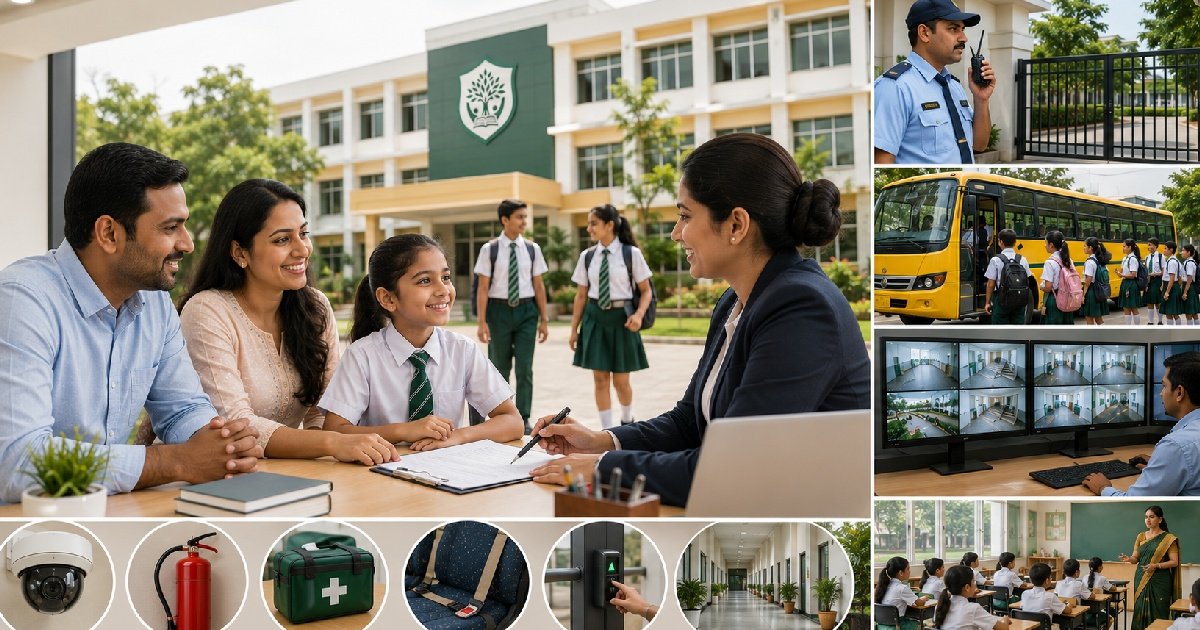
Choosing a school for your child is one of the most important decisions you will make as a parent. Beyond academics, curriculum, and facilities, one factor should be at the top of every parent’s checklist: safety. For parents in Nandyal evaluating CBSE schools, understanding the safety measures and protocols in place is essential for making an informed decision. This guide covers every aspect of school safety that Nandyal parents should evaluate before enrolling their child, from physical infrastructure to digital safety, transport security to emergency preparedness.
Key Takeaways
- Schools with comprehensive safety protocols reduce incident rates by 60% according to the National Institute of School Safety research.
- CCTV surveillance, trained security staff, and regular safety drills are the top three safety features parents should look for in a school.
- IDPS Nandyal maintains CCTV coverage across all campus areas, employs trained security personnel, and conducts regular safety drills throughout the academic year.
What Physical Safety Features Should a School Have?
Physical safety infrastructure is the foundation of a secure school environment. Every school should have a secure perimeter with proper fencing and controlled entry points. CCTV cameras should cover all common areas including corridors, playgrounds, entry and exit points, and parking areas. Security personnel should be present at all entry points, and visitor management systems should track everyone who enters the campus. Fire safety equipment including extinguishers, alarms, and sprinkler systems must be regularly inspected and maintained. Emergency exits should be clearly marked and unobstructed. Playground equipment should be age-appropriate, regularly inspected, and installed on impact-absorbing surfaces. Laboratories should have proper safety equipment, ventilation, and supervision protocols. When visiting a school, walk through the campus and observe these features yourself rather than relying solely on brochures or website descriptions.
How Does School Transport Safety Work?
School transport is a critical safety concern for Nandyal parents, especially for children who travel significant distances to school. Buses should be equipped with GPS tracking that parents can access in real time, CCTV cameras inside the bus, speed governors to prevent overspeeding, and first aid kits. Bus attendants should be present on all routes to assist younger children and maintain order. Drivers should undergo background verification, regular medical checkups, and defensive driving training. The school should have a clear policy for emergency situations during transport including breakdowns, accidents, or medical incidents. Parents should verify that the school follows all state-mandated transport safety guidelines and that buses undergo regular safety inspections. Ask about the student-to-attendant ratio on buses and the protocol for ensuring no child is left on a bus at the end of a route.
What Food Safety and Health Protocols Should Be in Place?
Schools that provide meals or snacks must follow strict food safety protocols. The kitchen should be clean, well-ventilated, and regularly inspected. Food handlers should have valid health certificates and follow proper hygiene practices including wearing gloves, hairnets, and aprons. Menus should be planned with nutrition in mind, and schools should accommodate allergies and dietary restrictions. A school nurse or trained medical staff should be available during school hours. The school should have a clearly communicated policy for handling medical emergencies including how parents are contacted, which hospital the child is taken to, and who has authority to consent to treatment. First aid kits should be available in multiple locations across the campus, and staff should be trained in basic first aid and CPR. IDPS Nandyal maintains comprehensive health and food safety protocols as part of its commitment to student wellbeing.
How Are Schools Addressing Cyber Safety and Digital Protection?
Cyber safety is an increasingly important aspect of school security. Schools should have content filtering systems on all school devices to prevent students from accessing inappropriate material. Computer labs and device usage should be supervised by trained staff. The school should have a clear anti-cyberbullying policy that covers behavior on school devices, school networks, and off-campus incidents that affect the school community. Students should receive age-appropriate digital literacy and cyber safety education as part of their regular curriculum. Parents should be informed about the school’s digital safety measures and how they can reinforce these lessons at home. IDPS Nandyal takes cyber safety seriously with supervised computer access, content filtering, and regular digital literacy instruction integrated into the curriculum.
What Emergency Preparedness Plans Should a School Have?
Every school should have comprehensive emergency response plans for multiple scenarios. Fire evacuation plans should include clearly marked exit routes, designated assembly points, and regular fire drills conducted at least once per term. Natural disaster plans should address earthquakes, floods, and severe weather appropriate to the region. Lockdown procedures should be in place for security threats with drills conducted regularly. Medical emergency protocols should cover allergic reactions, injuries, sudden illness, and pandemic situations. The school should communicate these plans clearly to parents and staff, conduct regular drills to ensure everyone knows their role, and review and update plans annually based on drill outcomes and changing circumstances. When evaluating a school, ask about their emergency preparedness plans and how often drills are conducted. Schools that take safety seriously will have detailed, well-practiced procedures for every scenario.
Why Is IDPS Nandyal the Safest Choice for Your Child?
International Delhi Public School Nandyal prioritizes student safety across every aspect of school operations. The campus features comprehensive CCTV surveillance, trained security personnel, a secure perimeter, and a visitor management system. Transport safety includes GPS-tracked buses with CCTV, attendants, trained drivers, and speed governors. The school maintains strict food safety and health protocols with a qualified nurse on staff. Cyber safety measures include content-filtered computer access and digital literacy education. Regular emergency drills ensure students and staff are prepared for any situation. IDPS Nandyal believes that a safe learning environment is the foundation for academic excellence and personal growth, and the school’s commitment to safety reflects this philosophy in every aspect of campus life.
How Can Parents Verify a School’s Safety Record?
Verifying a school’s safety record requires proactive research beyond what the school shares in its promotional materials. Start by asking the school directly about their safety policies, incident history, and recent safety audits. A transparent school will share this information willingly. Speak with current parents whose children attend the school to get their perspective on safety. Check if the school has received any safety certifications. Visit the campus unannounced if possible to observe how security operates during a regular school day. A school that genuinely prioritizes safety will welcome your questions and provide detailed, specific answers about their protocols without hesitation.
How Should Schools Handle Bullying Prevention and Response?
Bullying prevention is a critical component of school safety that extends beyond physical security measures. Schools should have a clear, written anti-bullying policy that defines bullying, outlines reporting procedures, explains investigation processes, and specifies consequences. The policy should cover physical bullying, verbal bullying, social exclusion, and cyberbullying. Students should be educated about bullying through age-appropriate lessons that teach empathy, respect, and the importance of standing up for others. Staff should be trained to recognize bullying, intervene appropriately, and support affected students. Reporting mechanisms should allow students to report concerns anonymously if they prefer, and every report should be taken seriously and investigated promptly. Parents should be informed about the school’s anti-bullying approach and how they can reinforce these values at home. Schools that create a positive school climate with strong anti-bullying programs see significantly fewer incidents and better student outcomes across all measures of wellbeing and academic performance.
School safety is a comprehensive responsibility that covers physical infrastructure, transport, food, health, cyber safety, emergency preparedness, and bullying prevention. When you find a school that takes all of these areas seriously, you have found a place where your child can learn, grow, and thrive with confidence.
Apply Now for 2026-27 Admissions/” style=”display:inline-block;background:#1f7143;color:#fff;padding:14px 30px;border-radius:6px;text-decoration:none;font-weight:700″ target=”_blank” rel=”noopener”>Apply Now for 2026-27 Admissions