
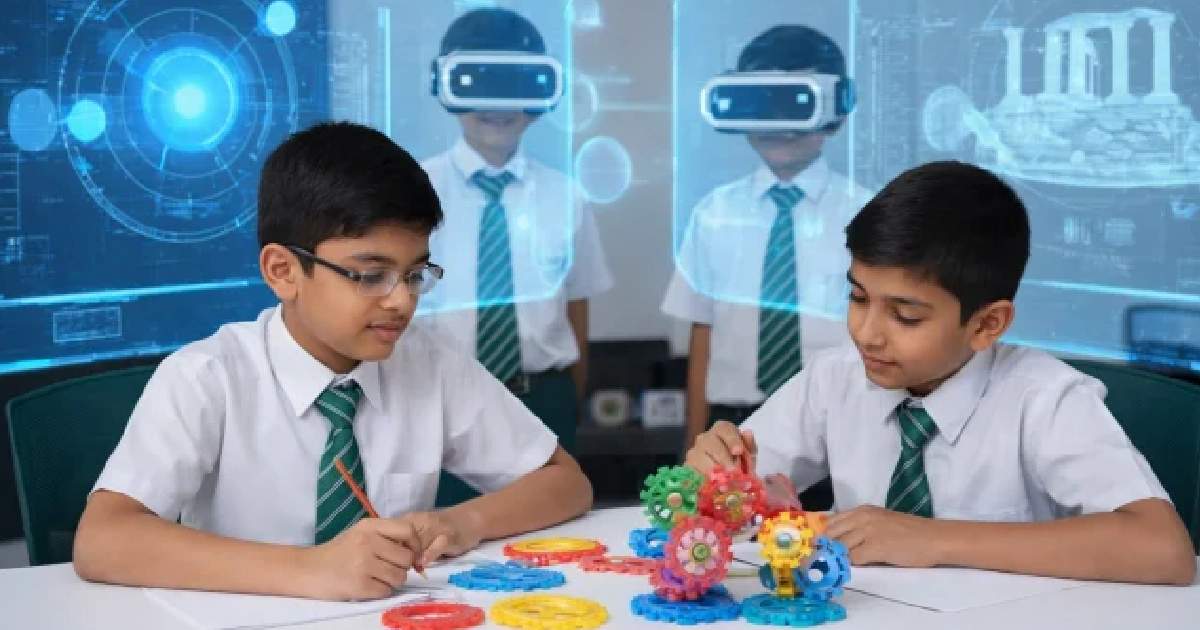
The transition from traditional, static classrooms to dynamic, responsive environments is a structural shift in how we approach child development. For decades, the primary school model remained largely unchanged: rows of desks oriented toward a central authority figure. This design was efficient for the industrial age but is increasingly incompatible with the cognitive and social requirements of the modern world.
Today, practitioners and researchers view the physical environment not as a passive background, but as a dynamic participant in the learning process—often referred to as the “third teacher.” When a space is intelligently designed, it functions as a tool that reduces cognitive friction and supports the varied ways children process information.
Defining the Parameters of a Modern Smart Learning Space
A “smart” learning space is frequently mischaracterized as any room equipped with hardware. However, the hardware is only one component of a much larger ecosystem. A truly smart classroom is defined by pedagogical alignment—where the furniture, lighting, acoustics, and digital tools are intentionally synchronized to support specific learning outcomes.
These environments prioritize agility. They are engineered to reconfigure on the fly, moving from a lecture format to small-group collaboration or independent study in a matter of minutes. This adaptability is critical because a child’s attention span and cognitive needs fluctuate throughout the day. By providing an environment that can mirror these shifts, we create a more sustainable path to academic achievement.
The Evolution of Educational Environments
| Design Element | Industrial Era Model | Modern Smart Space |
|---|---|---|
| Architectural Flow | Static, rigid, fixed-point focus. | Fluid, modular, multi-focal zones. |
| Information Delivery | One-to-many (Passive). | Many-to-many (Active/Collaborative). |
| Environmental Control | Standardized (One-size-fits-all). | User-responsive (Adjustable lighting/acoustics). |
| Technology Role | Peripheral (Computer labs). | Integrated (Natural part of the workflow). |
The Integration of Physical and Digital Architecture
The effectiveness of modern learning spaces depends on the synergy between physical design and digital tools. Installing an interactive display in a room with heavy, unmovable desks offers limited utility. The physical constraints prevent students from gathering around the technology to collaborate.
In contrast, when mobile furniture is paired with accessible technology, the room becomes an active learning space. Students can move their desks into a cluster to work on a shared digital project, then quickly transition to a quiet zone for reflection. This responsiveness ensures the environment serves the curriculum rather than the other way around.
1. Deepening Cognitive Agency Through Integrated Technology
Engagement is often discussed as a vague metric, but in a professional educational context, it refers to cognitive agency—the child’s ability to actively direct their own learning. Traditional formats often relegate students to the role of “information consumers.” Integrated technology shifts them into the role of “information producers.”
When students use digital tools to model scientific concepts or simulate historical events, they are engaging in higher-order thinking. Instead of memorizing a diagram of a cell, they might use a digital interface to manipulate cellular structures, observing how different components interact. This shift from passive observation to active manipulation is fundamental for long-term retention. It allows for a trial-and-error approach that is often missing from paper-and-pencil instruction.
2. Optimizing the Benefits of Collaborative Architecture
The modern professional world is increasingly reliant on cross-functional collaboration. Developing the social-emotional skills required for this begins with the architecture of the classroom. Traditional rows of desks are designed for silence and isolation, which can inadvertently hinder social development.
Smart learning spaces utilize “collaborative pods”—modular furniture arrangements that facilitate peer-to-peer instruction. When students work in these small groups, they are forced to negotiate, delegate tasks, and articulate their reasoning. The technology in these spaces, such as shared digital canvases or collaborative software, allows multiple students to contribute to a single problem-solving task simultaneously. This mirrors the real-world workflow where diverse perspectives are synthesized into a single output.
3. Addressing Neurodiversity Through Flexible Zoning
One of the most significant failures of the traditional classroom is its inability to accommodate diverse learning styles and sensory profiles. Every child has a unique threshold for stimulation. For some, a bustling collaborative environment is energizing; for others, it is overwhelming and leads to cognitive shutdown.
Flexible learning spaces address this by providing “zoning.” Within a single classroom, you might find:
- Active Zones: For high-energy group work and kinesthetic activities.
- Reflective Zones: Quiet, shielded areas for independent reading or focused writing.
- Maker Zones: Areas equipped with materials for tactile, hands-on construction.
By allowing students to choose the zone that matches their current cognitive state, we teach them self-regulation. This autonomy is a crucial developmental milestone, as it empowers children to recognize and advocate for the conditions they need to succeed.
4. Reducing Cognitive Load Through Environmental Psychology
The physical health of a room directly affects the mental performance of its occupants. Environmental factors like lighting temperature, CO2 levels, and acoustic reverberation are often overlooked, yet they are foundational to focus.
Modern design for child development incorporates these environmental metrics:
- Acoustics: Hard surfaces in traditional rooms cause sound to bounce, creating a “cocktail party effect” where students struggle to distinguish the teacher’s voice from background noise. Smart spaces use acoustic panels and soft surfaces to dampen sound, reducing the mental effort required to listen.
- Lighting: Fixed, harsh fluorescent lighting can disrupt circadian rhythms and cause eye strain. Modern spaces utilize tunable LED lighting that can be adjusted to a cooler, blue-heavy spectrum during high-energy tasks and a warmer, softer spectrum for quiet work.
- Air Quality: Increased CO2 levels in poorly ventilated rooms are linked to lethargy and impaired decision-making. Smart buildings often include air filtration systems that maintain high oxygen levels, ensuring the brain is physically capable of sustained focus.
5. Cultivating Strategic Digital Literacy
There is a distinct difference between “screen time” and “digital literacy.” The former is often passive entertainment; the latter is a sophisticated set of skills involving critical thinking, data verification, and ethical use of tools.
In a structured smart learning environment, technology is introduced as a professional tool. Children learn how to navigate complex information ecosystems, identify reliable sources, and use software for creative expression. This early exposure, guided by professional educators, removes the “novelty” factor of technology and replaces it with utility. Students graduate from these programs not just as users of technology, but as competent architects of their digital experiences.
6. Enhancing Physical Health and Vestibular Regulation
Sitting still for long periods is physically taxing for a developing child. It leads to poor posture, reduced blood flow to the brain, and a build-up of restless energy that often manifests as behavioral issues.
Ergonomic variety is a hallmark of modern learning spaces. By providing options such as standing desks, wobble stools, or floor-based workstations, we allow for “micro-movements.” These movements provide the proprioceptive and vestibular input that many children need to stay alert. When a child can subtly shift their weight or change their posture, they are less likely to become distracted by physical discomfort, leading to longer periods of sustained attention.
The Impact of Ergonomic Furniture on Classroom Performance
| Furniture Type | Physiological Function | Classroom Outcome |
|---|---|---|
| Standing Desks | Increases heart rate and oxygenation. | Higher levels of alertness during morning sessions. |
| Wobble/Perch Stools | Engages core muscles and provides sensory feedback. | Reduced “fidgeting” and better focus for kinesthetic learners. |
| Soft Seating | Lowers cortisol levels by providing a “home-like” comfort. | Better engagement during independent reading or reflection. |
| Mobile Tiered Seating | Improves sightlines and spatial awareness. | Facilitates group discussions without crowding. |
7. Synthesizing Achievement Through Holistic Design
The ultimate metric for any learning space is the measurable impact on student achievement. While individual tools like tablets or interactive boards are helpful, the cumulative effect of a well-designed space is greater than the sum of its parts.
When friction is removed—when students are comfortable, when the acoustics are clear, when the furniture supports the task, and when technology facilitates creation—academic performance naturally follows. Teachers in these environments report spending less time on classroom management and more time on high-value instruction. The environment does the heavy lifting of keeping students regulated and organized, allowing the educational process to move forward with greater efficiency.
Strategic Implementation: Moving Toward a Modern Standard
Transitioning to these environments requires a shift in perspective for school boards and parents alike. It is common to view furniture and technology as “amenities” rather than “necessities.” However, if we accept that the physical space is a “third teacher,” then investing in that space is as vital as investing in high-quality curriculum or professional development for staff.
Parents can advocate for these changes by focusing on the data-driven benefits of ergonomics and environmental psychology. Pilot programs are often an effective way to begin. By transforming a single grade level or a specific area like the media center, schools can gather internal data on student engagement and performance, providing the evidence needed for a broader rollout.
The goal is not to create a “high-tech” school for its own sake, but to create a space that respects the biological and psychological realities of how children learn. As we move further into a century defined by rapid change and digital integration, providing children with a responsive, intelligently designed home base for their education is one of the most practical ways to ensure their long-term success.
Frequently Asked Questions
Smart learning spaces are tailored to developmental stages. For early childhood, the focus is on tactile exploration, safety, and flexible “play-based” zones. As students move into secondary education, the spaces transition to mirror professional environments, emphasizing sophisticated digital integration, private study carrels, and high-functioning collaborative labs. The underlying principle of flexibility remains the same, but the implementation evolves with the student.
The cost should be viewed through the lens of long-term utility and student outcomes. Traditional furniture often has a shorter lifespan because it isn’t designed for the rigors of modern, active use. Modular, high-quality ergonomic furniture, while requiring a higher initial investment, is often more durable. Furthermore, the reduction in behavioral issues and the improvement in academic engagement provide a significant return on investment in the form of student success and teacher retention.
In a smart learning space, technology is purposeful rather than pervasive. It is integrated into the workflow as a tool for a specific task. Because the environment is zoned, tech-heavy activities are often separated from quiet, tech-free zones. This teaches students “situational awareness”—learning when technology is the right tool for the job and when it is time to put the device away and focus on interpersonal or analog tasks.
Yes. Creating a smart learning space doesn’t always require a new building. Many schools successfully “retrofit” older classrooms. This can be as simple as replacing static desks with mobile versions, installing acoustic clouds to manage sound in high-ceilinged rooms, and upgrading lighting to LED systems. The shift is more about the configuration and utilization of the space than the age of the structure itself.
Professional development is a critical component of the transition. Teachers are moving from a “sage on the stage” model to a “guide on the side” role. When the classroom is designed to be student-centered, teachers find they have more freedom to move between groups and provide targeted, small-group instruction. Most educators find that while the transition requires a shift in mindset, the resulting reduction in classroom management challenges makes for a more rewarding teaching experience.